“When you hold young people to high standards and make it clear that you believe they can meet those standards, you are respecting them because you are taking them seriously.”
– David Yeager, PhD
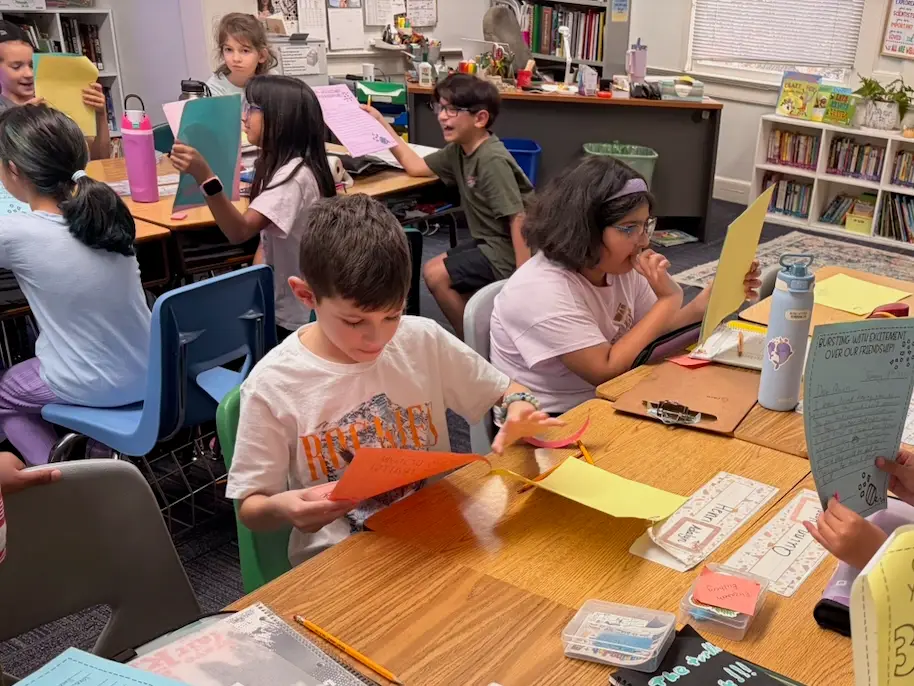
Whether it’s in the classroom, the theater, arts studios, on the fields and courts, or serving others in the community, our students impress us with their dedication. While they are innately driven, some of their devotion can also be attributed to the caring, compassionate adults who challenge and support them.
The combination of challenge and support is the subject of 10 to 25: The Science of Motivating Young People, by David Yeager, a professor at UT Austin. Our Middle and Upper School faculty read the book this summer, and Mallory Matthews, our Head of Lower & Middle School, and Dottie Hall, our Interim Head of Upper School, spoke to families on this topic at Back to School Night.
Yeager writes that young people want status and respect from peers and mentors, earned by making meaningful contributions. Self-esteem comes from taking on something difficult, being supported, and succeeding, not from excessive or false praise. Adolescents can tell the difference between honest feedback and comments given merely to make them feel good.
The Mentor Mindset
Yeager maps this onto a simple graphic: one axis for support, one for standards, producing four quadrants reflecting differing mindsets. High standards with low support is the enforcer. Low standards with low support is apathetic. Low standards with high support is the protector, doing things for young people rather than letting them struggle. High standards with high support is the mentor, and it’s the sweet spot: real expectations, matched with what students need to reach them.

“Upholding high standards can help maintain order and prevent the feared descent into chaos,” Yeager explains. “Simultaneously, the high levels of support convey how much we care for young people. By taking young people seriously and giving them the support they need to earn impressive reputations, we give them a route to status and respect.” An effective mentor, he writes, doesn’t take over like the protector, and doesn’t uphold impossible standards like the enforcer. Instead, mentors find ways for young people to earn respect-worthy reputations.
Keystone teachers and coaches know this intuitively. As Yeager puts it, “The feeling of earned prestige, rather than having something unearned given to you, ranks among the best feelings in the world, especially during an adolescent predicament.” Our faith in the Cobras who show up to classes, rehearsals, and practices compels us not to lower the bar but to help them get over it.
Why Grade Inflation Is So Damaging
Although grade inflation is not a problem at Keystone, it has been an issue on many college campuses and pre-collegiate schools. Softer grading can feel like kindness; nobody wants to be the reason a student feels discouraged. But it quietly tells a student we don’t believe they can do the work. Any parent of a teenager knows they detect false praise easily, and that our actions speak louder than our words. A grade that means something is worth more to a student, long term, than one that doesn’t. Our approach is to ask more of students and support them more, not less.
What This Can Sound Like at Home
Instead of “Why did you do that?” try “Help me understand what happened.” Instead of “Just let me fix it,” try “What do you think your next step should be?” These aren’t magic phrases. The shift is from solving every problem for a child to helping them participate in solving it, building the habits they’ll need for college and adulthood.
We Can Do Hard Things
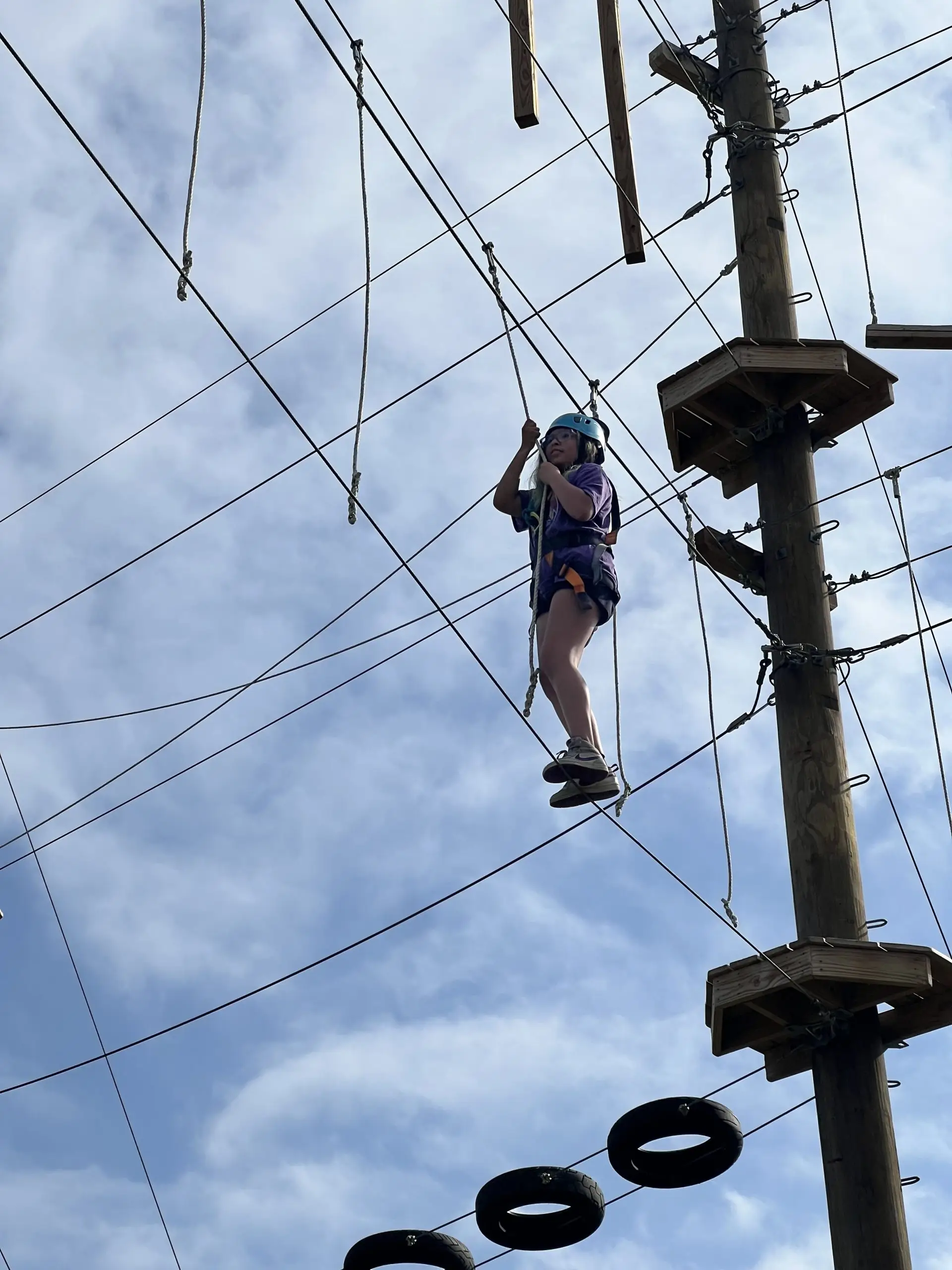
Many years ago, we gave our Middle School students T-shirts emblazoned with a simple mantra: “We can do hard things.” We know they will struggle at times, and not only is that ok, it’s required for their growth and development. They will emerge stronger for the fight, and more assured in themselves, their abilities, and their resilience, ready for whatever comes their way.