“All the great speakers were bad speakers at first.”
—Ralph Waldo Emerson.
Whether in classroom discussions, debate tournaments, or Model United Nations conferences, our students inspire us with their speaking skills. They organize their points, buttress their arguments with strong evidence, and present information with poise and confidence. Perhaps most importantly, they listen well so they can understand and respond to the topic rather than derail a discussion with bombastic and irrelevant ad hominem attacks.
Their exemplary public speaking skills stem in part from what they have learned in their classes and activities. To find out more about how we help them learn those skills, I asked four of our outstanding teachers: Mr. Tony Ciaravino (Mr. C), who teaches a middle school class in public speaking; Ms. Rachel Sadosky sponsors our middle school Junior Model UN club; Dr. Amanda Lopez, who oversees our upper school debate squad; and Ms. Noha PIttman, who teaches upper school history and sponsors the high school Model UN chapter.
Mr. C said that learning to express oneself in front of an audience is the most effective way to build self-confidence.
“The skills students practice, like projection, enunciation, and making solid eye contact with the audience, will serve them well,” he said.“However, it’s the confidence in themselves and in the value of their opinions that matters most. In addition, engaging in a spirited and well-organized debate with their classmates helps them practice valuable listening skills. It’s the balance between listening to others’ perspectives while passionately defending their own ideas that gives our graduates the humble self-confidence that sets them apart from their peers.”
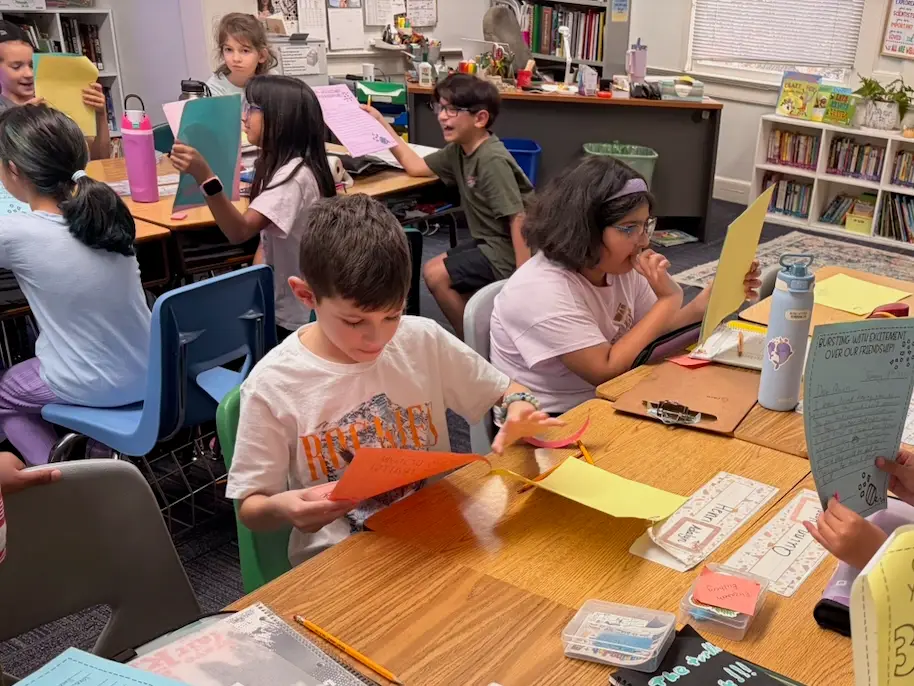
By the time students are delivering their presentations and making it look effortless, they have already learned about speaking and practiced their material. Teachers challenge and support students so they can go out on a limb and eventually see what they are capable of accomplishing. Beyond the classroom, young adults can hone their oratorical skills in extracurricular activities like Model UN and Debate Club.
Ms. Sadosky helps students become more proficient in public speaking by advocating on behalf of their assigned countries in the Middle School Model United Nations.
“Junior Model UN helps students develop and refine their public speaking skills,” she says. “The students reduce anxiety about public speaking through repetition and constructive feedback to give them ample speaking opportunities. Not only do they learn about formal speaking structure with parliamentary procedure and formal protocols, they can practice impromptu speaking practices when they need to respond to delegates’ points of information and in caucuses. The experience builds confidence and communication skills.”
The high schoolers in Model UN continue to hone the skills they learned in middle school, gain confidence, and learn more about themselves.
“In Model UN, I’ve watched our students find their voices — not just to speak, but to be heard.” Ms. Pittman said. “The confidence they develop when they stand, articulate an argument, and think critically in real time is transformative. They learn that speaking well isn’t about perfection; it’s about clarity of thought, conviction, and the courage to enter the conversation. When students learn to express themselves with purpose and poise, they begin to see themselves not as observers of change, but as active participants in shaping it.”
Of course, we already know as teachers and as parents, that Keystone students are good at debating. Whether they are arguing the finer points of American foreign policy or why they shouldn’t have to wash the dishes after dinner, they can litigate with the best of them. They know how to bolster their arguments with relevant statistics and anecdotal evidence, and they understand how to rebut someone else’s proposal.
We appreciate it though when Cobras demonstrate their proficiency on behalf of Keystone in debate tournaments. Dr. Lopez advises these students and helps them hone their skills.
“Participating in speech and debate builds immense confidence in public speaking. Not only do students learn to deliver prepared speeches with poise and clarity, but more importantly, they learn to think fast,” she says. “They craft impromptu speeches on topics they only received minutes earlier. They form critical rebuttals to their opponents’ cases on the spot. They speak with purpose and authority. I’ve seen students’ speaking skills improve in the course of a single tournament. Sometimes I’m blown away by the sophistication of their delivery! And it’s wonderful to see another side of a student who may be more reserved in class. Debate also builds confidence because often the students are working in teams. Having a partner to practice ideas with, a peer that cheers them on, motivates them to succeed.”
As parents and educators, our students’ ability and willingness to speak out may exhaust us at times. Are we really going to argue again why it’s not a good idea to wear that outfit to your grandparents’ house for Thanksgiving dinner? However, if we can continue to direct their energies toward entertaining others, resolving international conflicts, or solving intractable problems, we will have done them and our world an inestimable good.