By Keystone School
Every historical cookbook contains two stories. The first is the recipe itself — the ingredients, the techniques, the dishes a culture considered worth preserving in writing. The second is subtler: who the author assumed was reading, what they thought that reader already knew, and what that reveals about the world the book was written for.
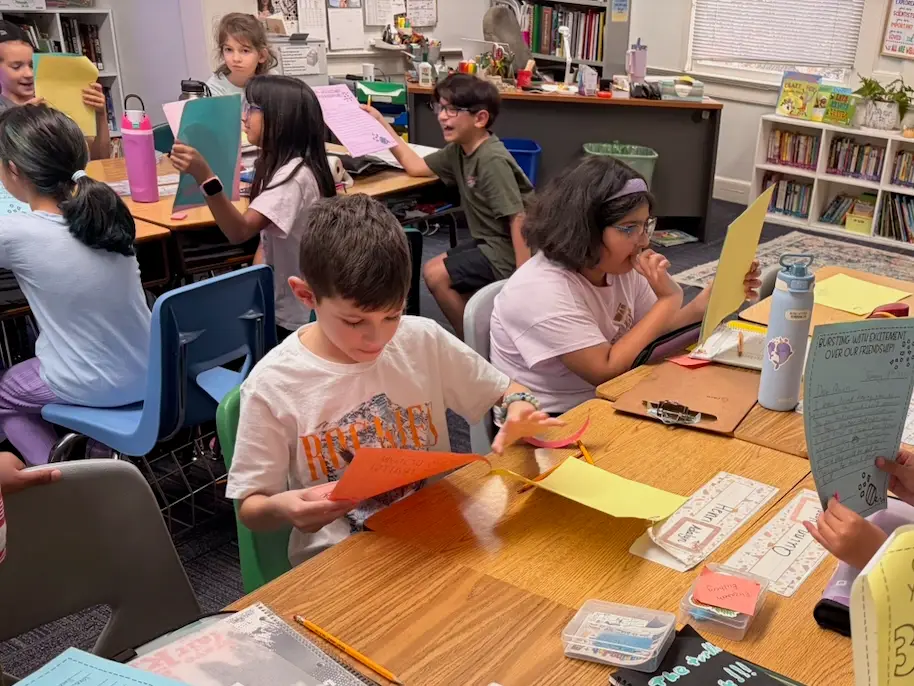
Students in Dr. Lopez’s Modern Global Issues: History Through Food class discovered both stories this week, when they cooked from historical cookbooks and brought the results to share.
What the Class Made
The dishes represented centuries of culinary history across multiple continents.
One student made savillum, an ancient Roman cheesecake documented in sources dating back more than two thousand years. Another brought salsa prepared from an 1831 Mexican cookbook, one of the earliest published records of a recipe that has since become one of the most recognizable foods in the world. A third made a fragrant rice and paneer dish from the Mughal era, drawing on a culinary tradition that shaped the food of the Indian subcontinent for centuries. And Dr. Lopez prepared potato croquettes from a 1930 Good Housekeeping cookbook, a snapshot of American domestic cooking between the wars.
The range of the project reflected the range of the course itself. History Through Food isn’t organized by geography or political era in the conventional sense. It’s organized around the idea that what people eat, how they cook it, and who they cook it for are as revealing as any battle or treaty.
What the Recipes Revealed
One of the most consistent observations from the class was something easy to miss if you haven’t tried to follow a historical recipe yourself: the cookbooks assumed their readers already knew a lot.
Instructions that a contemporary cookbook would spell out in careful detail were often compressed into a phrase or left out entirely. Quantities were approximate. Reading between the lines of a historical recipe requires understanding not just what the words say but what the author didn’t think needed saying. That gap itself itself is a historical document.
A recipe that assumes the reader knows how to keep a fire at the right temperature, or how to tell when a dough is ready by feel rather than timing, tells you something about who was cooking in that era and how that knowledge was transmitted. It also tells you something about who wasn’t expected to need written instructions, because they would have learned by watching.
That kind of reading — using a primary source not just for its content but for its assumptions — is exactly the analytical skill that history education at its best is trying to build.
Why This Course Exists
History Through Food sits at the intersection of several disciplines. It draws on history, anthropology, economics, and cultural studies, and it asks students to engage with primary sources — the cookbooks themselves — in a way that many history courses don’t. A student who has cooked from an 1831 Mexican cookbook has had a different relationship with that source than a student who has only read about it.
The course also reflects something specific about San Antonio as a place to study food history. The city’s culinary identity is layered in exactly the ways the course explores — indigenous ingredients, Spanish colonial influence, Mexican regional traditions, waves of immigration, and the constant negotiation between preservation and adaptation. Students here are not studying food history at a remove. They are living inside one of its most interesting chapters.
For families evaluating schools, courses like History Through Food are worth asking about. They reflect a school’s willingness to take interdisciplinary learning seriously — to design a course around a question rather than a subject, and to trust students to engage with it at a genuine intellectual level.
If you’d like to learn more about Keystone’s Upper School academic program and the courses available to students, we’d love to have you visit campus.